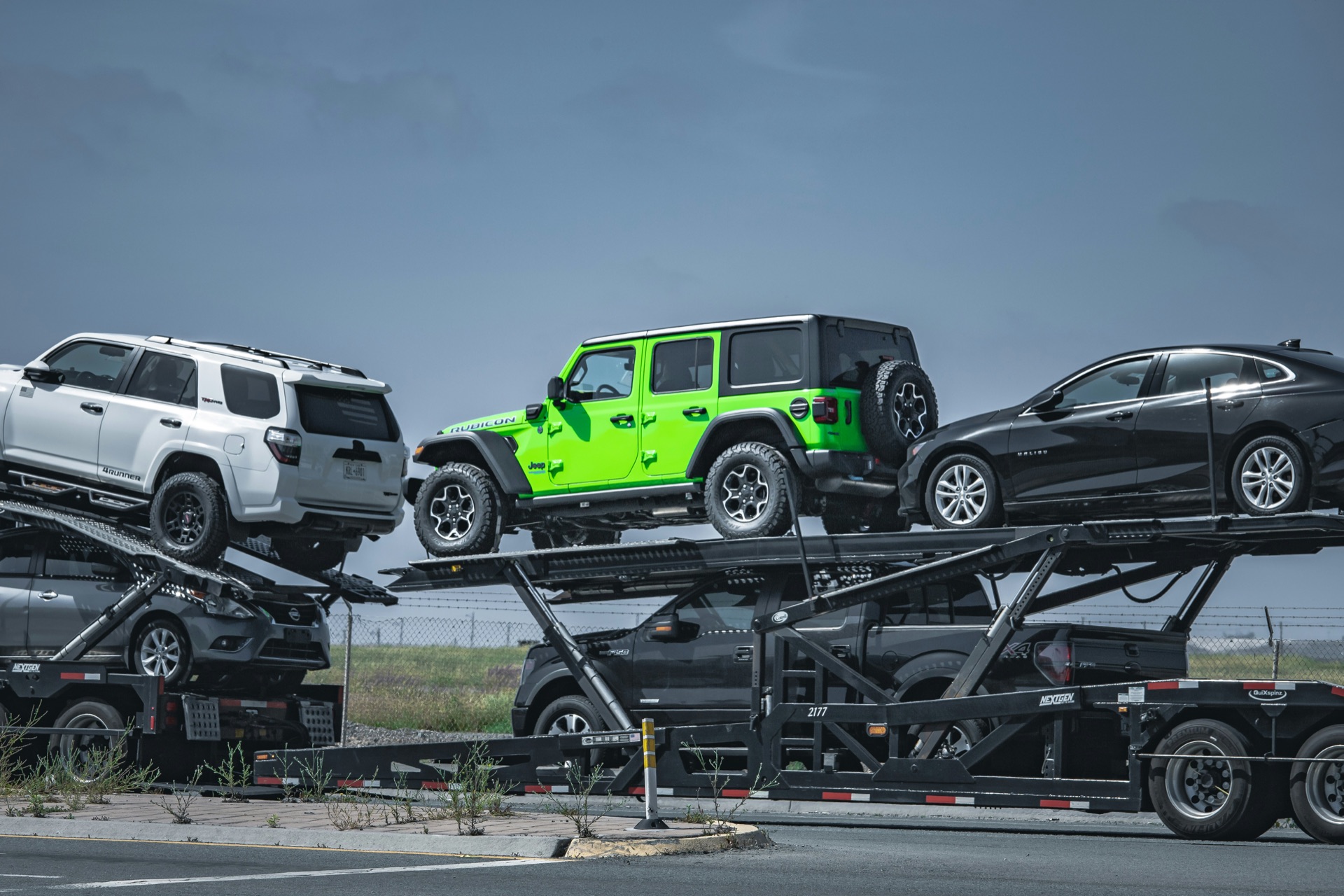
Why Vehicle Shipping Leads Slip Away Online
Almost nobody ships a car twice. Your visitor is a first-timer, comparing three tabs, and deciding in a couple of minutes which company feels safe enough to hand a vehicle to.
The quote form is the whole funnel
In this industry nearly every lead starts as a quote request. A form with fourteen fields — or a page offering only a phone number — hands the customer to whichever of their other open tabs made it easy.
They arrive already suspicious
People have read the horror stories about bait-and-switch quotes and vanishing deposits. If your MC and DOT numbers, cargo insurance and pricing are not stated plainly, your site looks like the one that burned them.
Nobody can tell what you actually are
Most customers do not know the difference between a broker and a carrier — and being vague about it reads as evasive. Explaining how dispatch really works is an advantage almost nobody in this market bothers to take.
Peak season hits a slow site
Snowbird runs, dealer moves and college season spike together, and most of that traffic is on a phone. A page that loads slowly or a form that fails on mobile turns your busiest month into your most expensive one.
Turn Vehicle Shipping Searches Into Quote Requests
An auto transport site has one job that matters more than the rest: get a nervous first-time customer from “I need my car moved” to a submitted quote request without losing them on the way. We build the whole path around that — a fast, credible site, a quote form that fits how you actually price, route and service pages that match how people search, and a Google Business Profile set up for the local and terminal searches that bring you the highest-intent traffic.
This is not a template with a truck photo dropped in. The structure follows how vehicle shipping is actually bought: reassurance first, because a car is being handed to a stranger; then clarity on what you move and where; then a form short enough to finish one-handed. Open versus enclosed, running versus inoperable, door-to-door versus terminal, dealer and auction lanes versus a single family car — these are different customers with different worries, and each gets its own page rather than one paragraph that tries to cover all of them.
The underlying work is our standard services aimed at this industry: web design and development for the credibility, the quote flow and the integrations behind it, SEO and technical optimisation so the route pages can rank, and digital marketing and ads when you need volume faster than organic search will deliver it.
- A short quote form built around how you price — not a fourteen-field wall
- MC and DOT numbers, cargo insurance and pricing explained where doubt starts
- Route and state pages for the corridors you genuinely run
- Open, enclosed, inoperable and dealer transport described separately
- Local SEO for “car shipping to [state]” and “auto transport near me”
What We Build for Auto Transport and Hauling Companies
The parts of a vehicle shipping site that actually decide whether a quote request gets submitted.
Vehicle Shipping Quote Forms
ZIP to ZIP, year, make and model, running or inoperable, open or enclosed, date window — enough to price, short enough to finish. Routed straight to dispatch or your CRM.
Route & Service Area Pages
Pages for the corridors you actually run — coast to coast, Florida snowbird season, dealer and auction lanes — so you can match searches like “California to Texas car shipping.”
Open, Enclosed & Specialty Pages
Separate pages for open, enclosed, inoperable, motorcycle, classic and exotic transport, each with the cost-versus-protection trade-off spelled out honestly.
Credentials & Insurance Display
MC and DOT numbers, cargo insurance limits, bonding, and a plain explanation of how a claim would work — placed in the first screen, where the doubt is.
How Shipping Works Page
Pickup windows, driver contact, the bill of lading and the inspection at both ends. The honest version of the process, which quietly prevents most disputes and cancellations.
Google Business Profile & Local SEO
Set up for “auto transport near me,” terminal-city searches and the states you cover, so nearby high-intent traffic finds you rather than a national lead broker.
Cómo trabajamos
The same five steps we run on every build, applied to an auto transport operation.
Discovery & Research
Your routes, equipment and whether you carry or dispatch — plus how you price, so the quote form matches reality.
Wireframe
Where reassurance sits, how short the quote path can be, and what a first-time shipper needs to read before submitting.
Design & Build
Your brand applied, then built out — route pages, service types, credentials, and the quote form wired to dispatch.
Feedback & Refinement
Two structured rounds. You review it as a customer would, and we tighten the wording that creates doubt.
Launch & Support
Search Console, Business Profile and form tracking live at launch, then updates as routes and seasons change.
Auto Transport Website Questions, Answered
By removing the reasons people leave. Most auto transport traffic arrives ready to price a move, so the quote form should be reachable from every page and short enough to finish on a phone — pickup and delivery ZIP, vehicle year, make and model, running or inoperable, open or enclosed, and a rough date. Anything else can be asked once you are talking. The other half is answering the doubts that stop someone submitting: who you are, whether you are a broker or a carrier, what your cargo insurance actually covers, and how the price you quote relates to the price they pay. Those two things — a short form and honest answers next to it — do more than any redesign.
The things a customer is nervous about, stated plainly: your MC and DOT numbers, whether you operate your own trucks or dispatch to vetted carriers, cargo insurance limits and how a claim would work, the service types you offer (open, enclosed, inoperable, motorcycle, classic), the routes and states you cover, and an honest explanation of pickup windows and how dispatch actually works. Vehicle shipping is bought sight-unseen by people who have often read horror stories, so the site that explains the process without spin tends to get the call.
Yes, and for this industry it is usually the highest-value SEO work. People search by route — “car shipping from California to Texas,” “auto transport to Florida,” “vehicle shipping Chicago.” A single page that says “we ship nationwide” cannot match those. We build pages for the corridors you actually run, with the detail that makes them worth reading: typical transit time, seasonal demand, terminal or door-to-door options. We only build pages for lanes you genuinely serve — thin pages for routes you would refuse do more harm than good.
Yes. We build the form around how you actually price: ZIP to ZIP, vehicle details, operable or not, open or enclosed, transport type and date window, with conditional fields so someone shipping one sedan is not asked dealer-fleet questions. Submissions go where your team already works — email, a shared inbox, or your dispatch or CRM system if it has an API. We can also add a follow-up path so a lead that goes quiet gets a second touch instead of disappearing.
Yes — technical SEO, route and service pages, and a Google Business Profile set up for the searches that matter here, including “auto transport near me” and terminal-city searches. What we will not do is promise a position or a lead count. This is a competitive, broker-heavy search market with large national players bidding on the same terms. What we commit to is a technically sound site, pages built around real routes and services, and reporting that shows what is actually working.
The Services Behind an Auto Transport Company’s Website
Otros sectores que atendemos
Auto Transport & Hauling
Turn vehicle-shipping searches into quote requests you can actually answer.
You are here